
Written by Aram
Founder & Designer, Lovely Moments Planning
Reviewed & updated August 28, 2026
Short answer
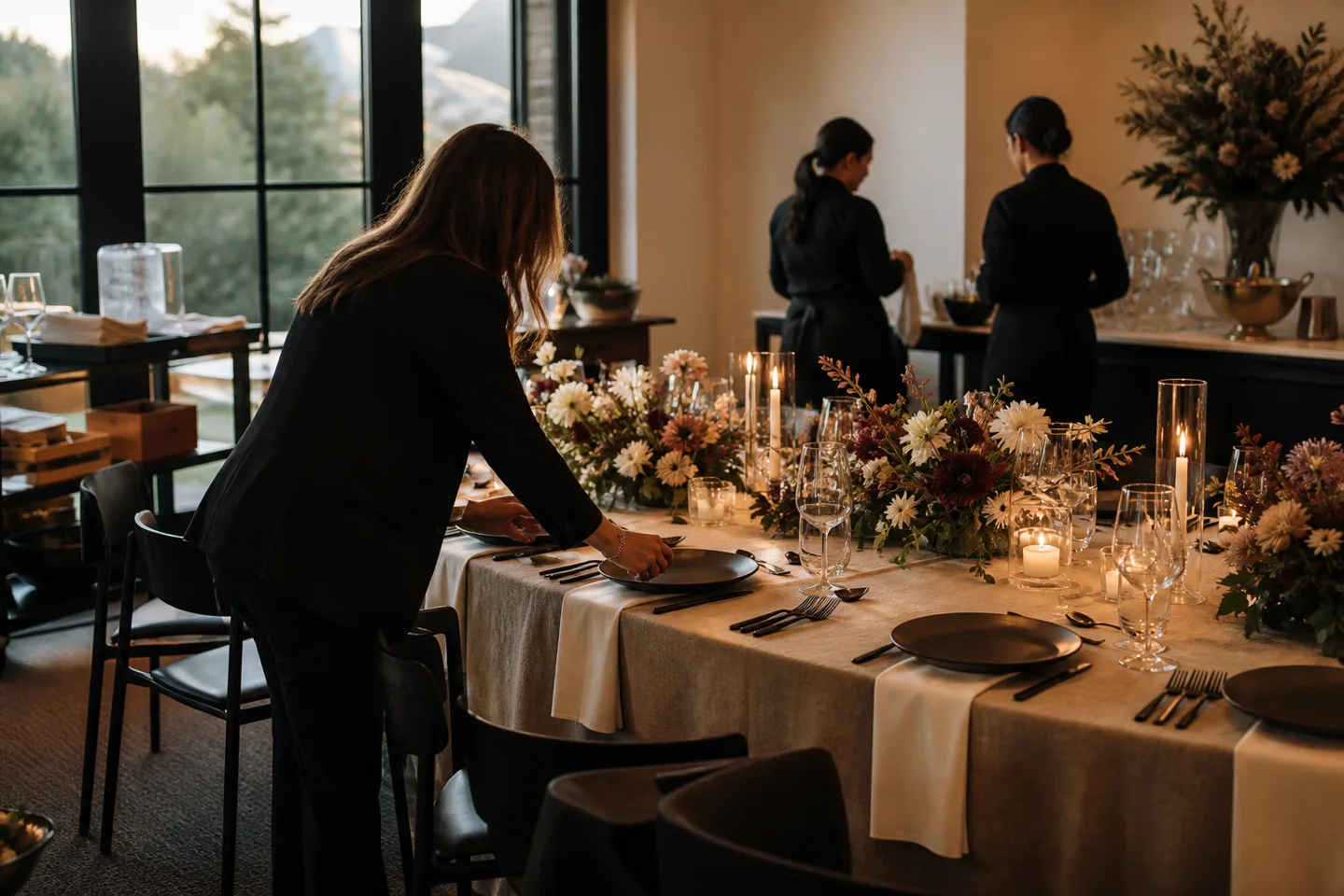
A full service private event planner turns the host’s priorities into a workable budget, venue, vendor team, design, guest plan and event day operation. Behind the scenes, the planner manages contracts, dependencies, quantities, floor plans, timing, staffing, risk, payments, setup and the many small decisions guests should never notice.
At a glance
What guests see, and what the planner is managing
| Guest experience | Behind the scenes |
|---|---|
| A warm arrival | Parking, access, signage, staffing, weather and welcome timing |
| A beautiful room | Concept, floor plan, rentals, florals, lighting, quantities and installation |
| A relaxed meal | Catering scope, dietary needs, service style, kitchen access and pacing |
| Natural transitions | Master timeline, cues, vendor communication and contingency |
| A present host | Decision filters, family communication, payments and issue resolution |
Before anything is booked
The planner converts ideas into priorities: who the event is for, how it should feel, what the host wants to participate in and what should be delegated. From there, the planner builds a budget, recommends the right order of decisions and compares venues and vendors on full value, not only headline price.
Contract review is operational as much as financial. The planner looks for access times, cancellation terms, service charges, required vendors, overtime, rentals, staffing, insurance, weather and responsibilities that need to align across agreements.
- Budget and decision calendar
- Venue and vendor sourcing
- Proposal comparison and scope reconciliation
- Design development and quantity tracking
- Guest logistics and communication plan

On event day
The planner receives vendors, confirms setup against the plan, protects the timeline, handles questions away from the host, checks guest facing details and adjusts when conditions change. That can mean moving a welcome moment, correcting a table count, pacing dinner around speeches or activating the weather plan.
Full service does not mean the host loses creative control. It means decisions arrive at the right time with clear options, and execution does not depend on the host solving problems while greeting guests.
Firsthand perspective
From the planning desk: the invisible 20 minute shift
A late vendor can create a chain reaction across setup, photography and guest arrival. A planner may resequence installations, protect the photographer’s priority details and move a nonessential task after doors. Guests see a finished room; the host never has to coordinate the recovery.
Illustrative composite based on common private event timing dependencies.Use this list
What to ask a full service planner
- 01 Which planning, design and production deliverables are included?
- 02 How are budgets, proposals and payments tracked?
- 03 How many vendor options are sourced per category?
- 04 Who creates the floor plan and master timeline?
- 05 How many team members attend and for how long?
- 06 What guest communication and RSVP support is included?
- 07 What changes or expenses require written approval?
Cited external facts
Sources and fact checks
- 1
Cvent’s planning guide includes venue sourcing, vendor communication, branding, marketing and budget tracking across the event cycle. Cvent Event Planning Guide ↗
- 2
Lovely Moments Planning’s official service page describes handling celebrations from theme and design through logistics for weddings, birthdays, corporate events and other occasions. Lovely Moments Planning, Events ↗
Sources were reviewed on August 28, 2026. Agency rules, prices and vendor guidance can change; confirm current details before contracting or filing.
Plan your next event with Lovely Moments Planning
Full service event strategy, planning, design and production for the San Francisco Bay Area and destinations beyond.
Explore private event planning · View selected work · Start your inquiry