
Written by Aram
Founder & Designer, Lovely Moments Planning
Reviewed & updated August 28, 2026
Short answer
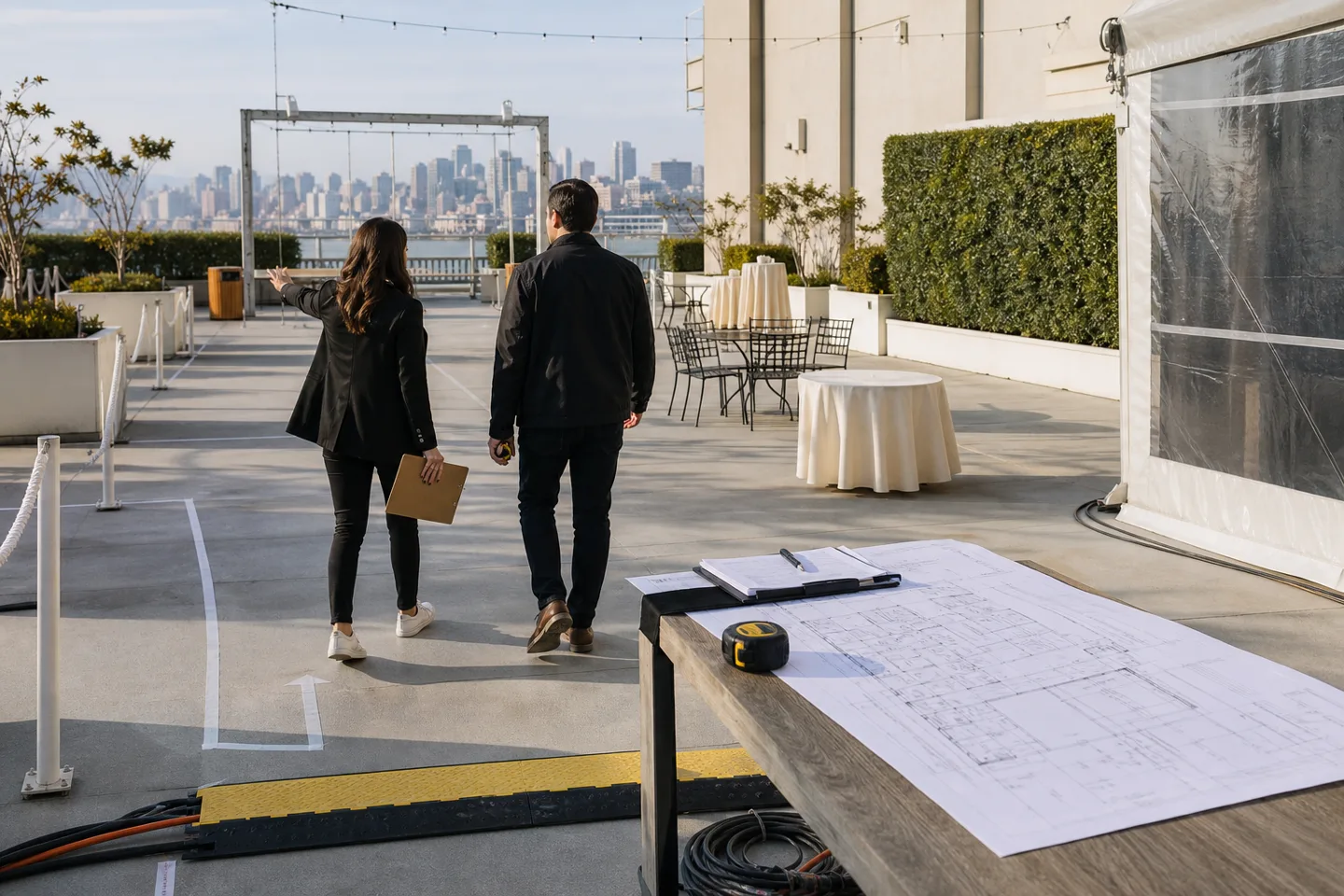
Start permits as soon as the site and event format are known. In San Francisco, the needed approvals can change with location, public access, amplified sound, alcohol, food service, generators, open flame, tents or temporary structures. Confirm the responsible applicant, submission deadline and inspection path in writing with the venue and issuing agency.
At a glance
Common triggers to investigate
| Event element | Possible authority or approval | Ask early |
|---|---|---|
| Entertainment or amplified sound | SF Entertainment Commission; venue specific limits | Indoor/outdoor rules, hours, monitoring and neighborhood conditions |
| Alcohol sales or service | California ABC authorization; venue/caterer license | Who holds the license, what approval is required and where service is allowed |
| Temporary food service | Local public health department | Vendor permits, food source, handwashing, storage and application lead time |
| Open flame, generator, tent or temporary assembly | Local fire authority | Permit, inspection, fire watch, egress, fuel and suppression requirements |
| Street, park or public property | Property agency plus transportation/public works as applicable | Site map, insurance, closures, security, sanitation and restoration |
The venue contract is not a permit review
A venue may approve an event concept while public agencies still require separate applications. Ask for the property’s current permit conditions, maximum occupancy, approved event areas, sound rules, vendor exclusivity, loading path, power, elevator dimensions, waste plan and insurance requirements.
Build one permit matrix with the requirement, agency, applicant, due date, fee, inspection and approval document. Keep copies on site with the production lead.
- Use the exact address and site map
- Show tents, cooking, generators, exits, bars and stages
- Confirm whether the venue, caterer or organizer applies
- Do not treat application submission as approval
Design around access and operations, not only capacity
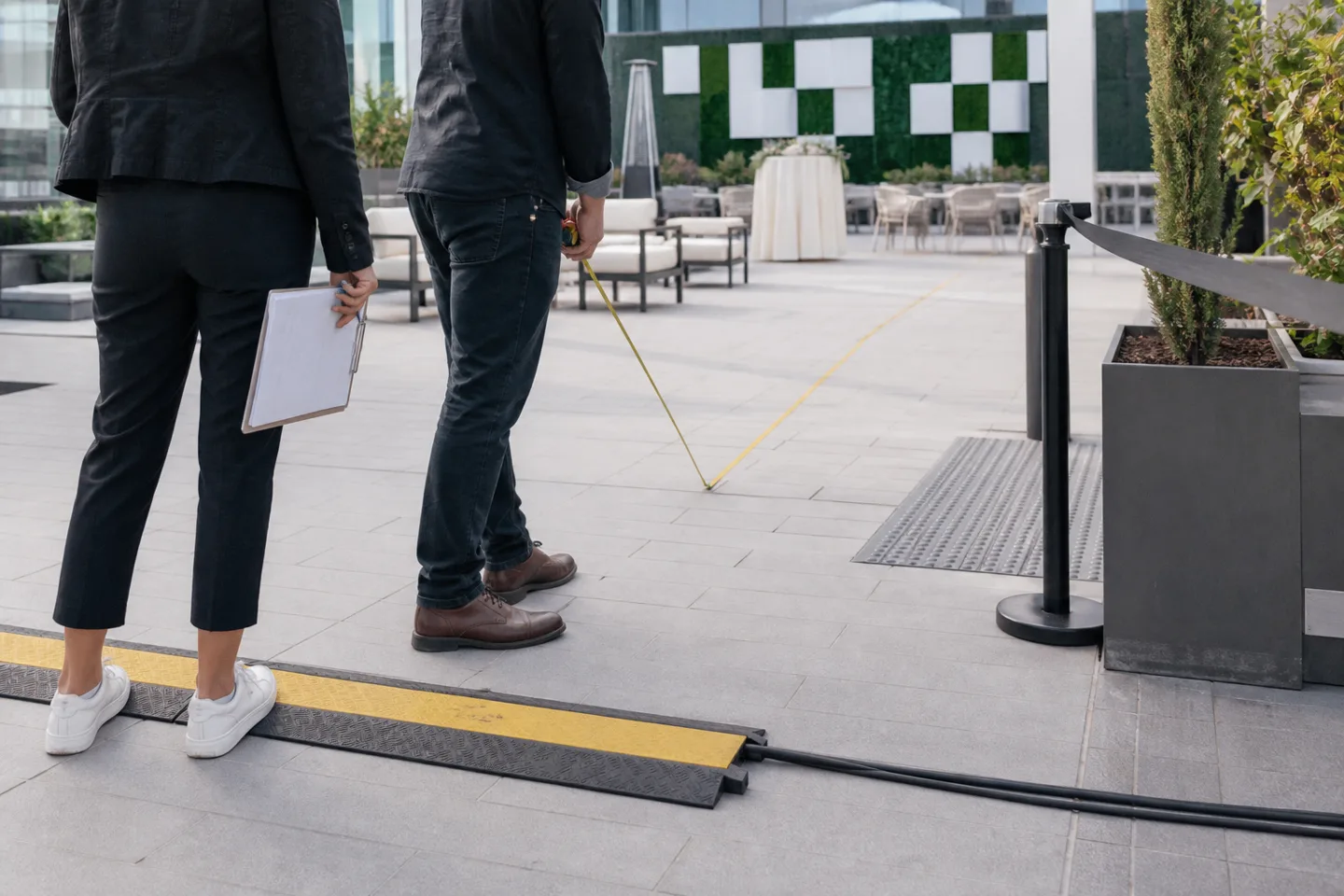
Guest capacity does not answer whether the room works. Review accessible arrival, paths, restrooms and seating; emergency egress; queue space; noise spill; back of house circulation; deliveries; waste; and the time available to install and strike.
Rules differ by city and property. This guide is planning information, not legal advice. Verify current requirements with the venue and relevant agency before contracting affected vendors.
Firsthand perspective
From the planning desk: one generator changes several plans
Adding a generator for an outdoor program can affect fire review, fuel placement, cable protection, noise, load in and the floor plan. Flag power requirements during site selection so the technical solution and permit path develop together, not after design approval.
Illustrative composite; permit triggers and lead times vary by jurisdiction and event.Use this list
Permit and venue due diligence
- 01 Create a complete event element list and site plan
- 02 Confirm property authorization and venue operating rules
- 03 Identify sound, alcohol, food, fire and public property triggers
- 04 Assign the applicant and approval owner for each requirement
- 05 Track submission, inspection and approval, not only due dates
- 06 Carry final permits, conditions and emergency contacts on site
Cited external facts
Sources and fact checks
- 1
San Francisco Fire publishes permits and a supplemental special events application; it notes that a fire permit does not replace other licenses required by law. San Francisco Fire Department ↗
- 2
California ABC says Type 58 and Type 91 caterer permit holders must obtain authorization for each catered event, and an application is not automatically approved upon submission. California ABC FAQs ↗
- 3
San Francisco’s Temporary Food Facility application says forms and fees are submitted through the event coordinator at least 14 days before the event and food must come from approved sources. SF Department of Public Health ↗
- 4
The ADA National Network provides a temporary event guide covering barriers, accessibility planning and resource coordination. ADA National Network ↗
Sources were reviewed on August 28, 2026. Agency rules, prices and vendor guidance can change; confirm current details before contracting or filing.
Plan your next event with Lovely Moments Planning
Full service event strategy, planning, design and production for the San Francisco Bay Area and destinations beyond.
Explore corporate event services · View selected work · Start your inquiry